
Photo by Gabriel Hathaway
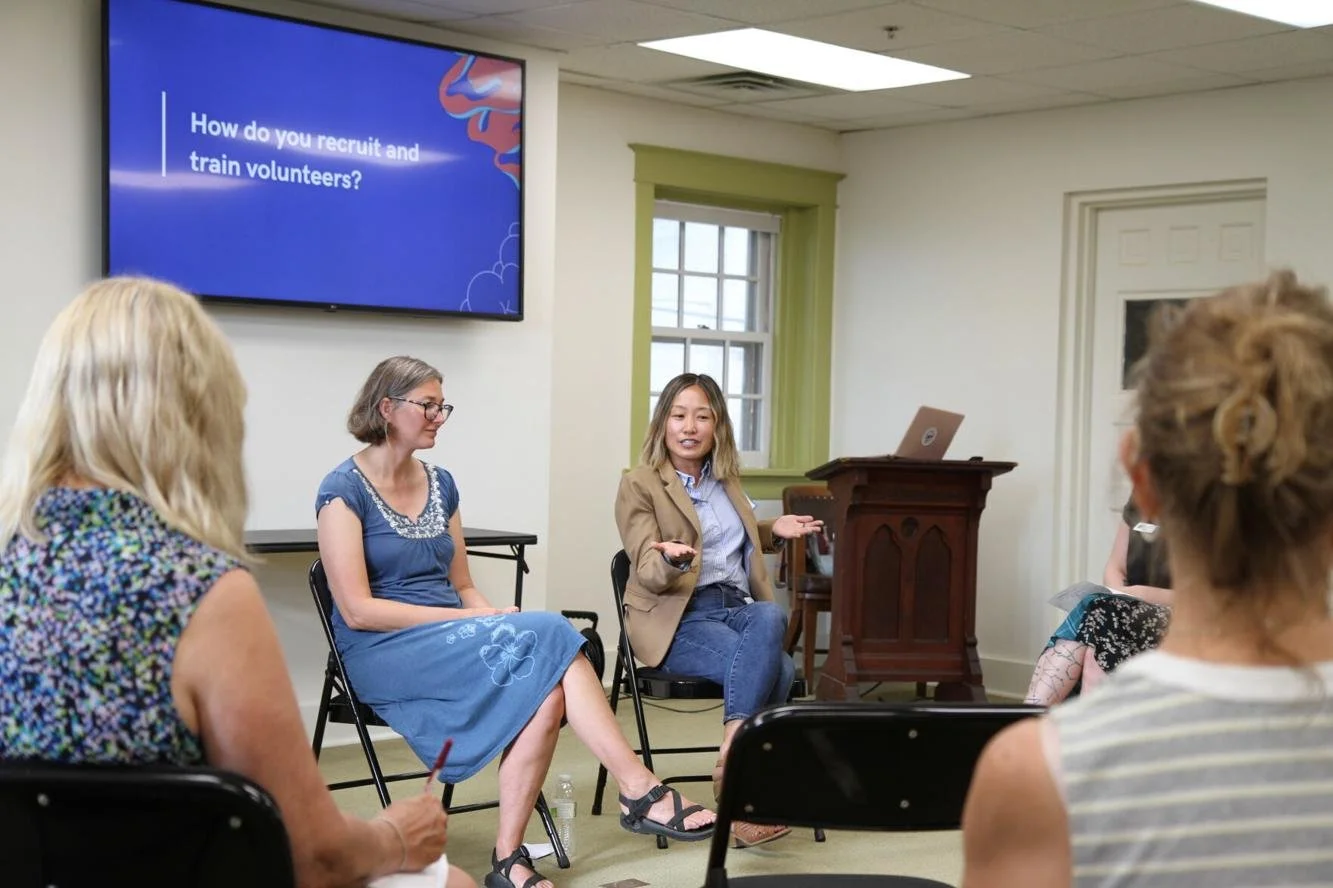
Fools Five social media and public relations manager Emily Ulrich (right) shares some advice about attracting volunteers at a Leading Local workshop organized by Engage Winona and the Winona Post on June 9.
By Gabriel Hathaway, Originally written for the Winona Post
Volunteers are the lifeblood of many nonprofits, community organizations and events, but attracting and keeping committed helpers has become increasingly difficult for many groups. Earlier this month, as part of a Leading Local workshop organized by the Winona Post and Engage Winona, a panel of local volunteer organizers shared their experiences and advice.
Engage Winona and the Winona Post are partnering to host a variety of civic-focused workshops and events through 2027 under the umbrella of Leading Local. A recent workshop on June 9 focused on volunteerism and mutual aid, with stories and advice from some community leaders. Engage Winona Program and Communications Manager Isabel McNally said this was one event that she was really looking forward to because of how important it is. “So much of what makes this community a place that we love and want to live in is built on a lot of those people doing values-driven service,” McNally said. She added, “We wanted to spend some time honoring the people who have done it and who have done it well because they have a huge amount of information and knowledge.”
One big piece of advice leaders shared to help attract volunteers is to have a variety of jobs for people that also vary in commitment level. In an interview, Habitat for Humanity of Winona County Executive Director Brittany Hennessy emphasized what a big role volunteers play in the organization's operations, adding that more than 450 volunteers annually put in 10,000 hours of volunteer labor. Some of these jobs include working at the Restore and taking apart things for scrap metal, working the cash register, accepting donations and stocking shelves, helping on construction projects, or helping out with office work, fundraising, and attracting business sponsors. She also advocated building relationships with strong volunteers and empowering them to be leaders. “In small organizations you're like, ‘I don't have the capacity for this as one person to have all these different volunteers,’ but do you have somebody you really trust that's a volunteer who can kind of organize that for you? Probably,” Hennessy said. Melissa Gordon, who helps organize volunteers for the Winona Catholic Worker house and was a workshop panelist, agreed that having a variety of options for volunteers is important, adding that flexibility is also important. “Because we don't have requirements of, ‘Oh, you have to volunteer so many hours per week or per month,’ people can just come as little or as much as they want and so, there's a lot of flexibility there that really entices people to come volunteer for us,” Gordon said.
Once you’ve gotten a few volunteers, another challenge is keeping them around. Dwayne Voegeli, who volunteers for the Winona Sheltering Network, the Winona Rapid Response Team, and the day and overnight shelters, said one way to help with sustainability is by connecting volunteers with a job that’s a good match. He noted that some people don’t like attending meetings but will do really well if given a specific task, or someone may love baking and could donate food. Emily Ulrich, who leads social media and public relations work for the Lewiston cancer benefit race Fools Five, said it is also important to focus on developing the community around a program versus solely focusing on the program alone. She also agreed with pairing people with jobs they excel at, such as handling refreshments, aid stations, or radio ads. “For us, we just find those people who really enjoy what they do, they find their niche and then everything else just kind of comes naturally. That's what I think is a small part of what makes an organization so successful.”
Hennessy, along with Winona Area Non-Profit Alliance Chair Eileen Moeller, also emphasized the importance of thanking volunteers and showing appreciation. “Making sure that it's a meaningful engagement, making sure that people are being acknowledged and thanked and that they feel valued, I think those are the biggest things in getting people to continue to engage,” Moeller said.
Sometimes organizations also have a super volunteer that has been handling many duties for years. But that volunteer cannot last forever and may move or have other priorities crop up that pull them away, leaving a huge gap for the organization. Moeller and Hennessy said organizations should treat that super volunteer like any other employee and understand and document their duties, how they do it, contacts, and more. “I think we've all had like incredible people who have stepped away, and you're just … gutted because they were so proactive or willing to independently take action,” Hennessy said. “So I don't think that there's a way to make it not happen, but you can prepare for when it does inevitably happen. That’s good documentation, understanding of their processes, and what they do for you as well.”
Change and challenges are inevitable for any organization as time goes on. While there isn’t any one solution, the workshop panelists shared some advice. One big piece of advice was to just try different things through trial and error, Voegeli and Ulrich agreed. Moeller suggested understanding the challenge and communicating it with volunteers, staff, donors, and other stakeholders. If the issue persists, she suggested reaching out to other organizations or the Winona Area Non-Profit Alliance. Hennessy suggested also trying to get out of the nonprofit bubble and partner with businesses or the government. Hennessy added that it is also important to consider what your organization's core service is and what the bare minimum is needed to accomplish it. “We are expected right now to be more adaptable than ever, and you just have to be or you won't stay afloat. It's everything from policy to funding to volunteers to staff. If you're not willing to be adaptable and constantly solve problems, it's probably going to be a bad time for you,” Hennessy said.
Winona Rivertown Lions Vice President Lisa Leonard said her group has been struggling to attract volunteers and attended the workshop hoping to get some ideas. “After hearing all the different groups share their experiences, I'm energized to go back to my Lions Club to brainstorm about how we can invite more people to become involved. One thing I specifically heard is that we need to plan a meet and greet to showcase what we do and have fun doing it,” Leonard said.